Pavlova with Strawberry Jam and Rosewater Chantilly Cream

Unlike its distant cousins macarons which have gained so much attention in the culinary world, pavlova- also a meringue based dessert, remains rather less known. The dessert was believed to be created by a hotel chef in the 1920s in honor of the beautiful Russian ballet dancer Anna Pavlova during one of her tours to Australia and New Zealand (thanks Wikipedia!). A pavlova is made with a French meringue which is cooked in the oven for a long time, about an hour, at a very low temperature to let it dry out. The outer shell of the meringue should be crisp, while the interior has a fluffy, marshmallowy texture. The cooled meringue is then topped with whipped cream and fruit right before being served. Nothing beats a good pavlova in springtime – light and airy, topped with seaonal berries, it feels a lot “healthier” than it really is!


(6 servings)

Pavlova
Ingredients:

  • 3 egg whites
  • 1/2 teaspoon cream of tartar (can be substituted with white vinegar)
  • Pinch of salt
  • 3/4 cups sugar

Directions:

  1. Preheat oven to 120 C.
  2. Line a baking sheet with parchment paper. Draw 4 4-inch circles on the parchment paper.
  3. With an electric mixer set to medium, whisk together the egg whites, cream of tartar and salt for 3 minutes. Let the mixer keep running and add in the sugar, a spoonful at a time. Stop when the meringue is thick and can form stiff (around 6 minutes in total).
  4. Spoon mixture inside the circle drawn on the parchment paper. Start from the center, spread mixture toward the outside edge, building edge slightly, and leave a slight depression in the center.
  5. Bake for 1 hour and 20 minutes. (Halfway through baking rotate the baking sheets so the meringues will cook as evenly as possible.)
  6. Allow to cool in the oven before trying to remove them from the parchment paper (otherwise they may stick!).

Rosewater Whipped Cream
Ingredients:

  • 2 cups heavy whipping cream
  • 2 tablespoons powdered sugar
  • 1 drop of red coloring
  • a very small amount of rose water

Directions:

  1. Add the cream to the bowl of an electric mixer.
  2. Beat on high speed until it begins to thicken.
  3. While the mixer is still running gradually add the sugar and coloring.
  4. Once the whipped cream is ready turn off the mixer.
  5. Add rosewater in small amount. Taste and see if you think the whipped cream has enough rose flavor, if not repeat the process. (Rose water can be quite potent so you don’t want to overdo it.)
  6. Assemble the dessert by putting the whipped cream on top of the Pavlova, add strawberry jam and berries for garnishing.

Cheese and Bacon Bread Bake

Rise and shine, it’s breakfast time! Sunday is my favorite day of the week, no morning rush or unmet challenges, finally there is time to sit back and enjoy a relaxing breakfast. This bread bake is a savory version of bread pudding. The recipe only calls for simple ingredients, you can always manage to scrap together some version as long as you have egg and bread.It tastes like a cross between a quiche and omelette; moist, custardy on the inside while the edge is crunchy and golden…

A Sunday well spent brings a week of content, start your day with a smile and a great breakfast!


Ingredients

  • 250g bacon, diced
  • 6 eggs
  • 1 carton of milk
  • Pinch of salt and black pepper
  • I semi- baguette (preferably slightly stale) cut into 1 inch cubes
  • 2 cups grated Mozarella cheese
  • Parsley, for garnish


Directions

Preparation beforehand:

  1. Heat a large non stick pan over high heat. Add all but 2 tbsp of bacon (reserve for topping) and cooked until lightly browned.
  2. Remove the bacon from the pan and drain the excessive oil.
  3. Whisk the eggs, milk, salt and pepper in a bowl.
  4. Place the bread in a large bowl. Pour in the egg mixture, 1½ cups cheese and cooked bacon
  5. Set aside in the fridge for at least 30 minutes ( so all the egg is soaked into the bread) or overnight.

To Cook

  1. Preheat oven to 180C.
  2. Coat a 9″ cake tin with butter.
  3. Pour the bread mixture into the cake tin, scatter with remaining uncooked bacon and remaining cheese. Cover loosely with foil.
  4. Bake for 25 minutes, then remove the foil and bake for a further 10 minutes until golden on top.
  5. Garnish with parsley.
  6. Allow to rest for 5 minutes before cutting into slices to serve.

Chicken Cordon Bleu

Happy Easter everyone! To me, Easter means more than just chocolate eggs, it also signifies the start of spring. While I am busy updating my wardrobe with all the pastel-color items. My slumbering taste buds also tingle in anticipation of the fresh new flavors of the approaching season. Lighter dishes for brighter days- it’s time to bid farewell to all the hearty soup and stew!

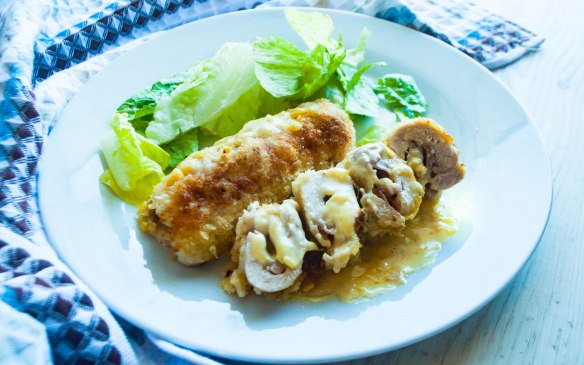
Chicken cordon bleu is possibly the most famous “French” chicken recipe in the world when, in fact, it is not historically connected to France. Chicken cordon bleu was an American creation in the mid-20th century. Only its name, which means “blue ribbon” in French, can be traced to France. In a typical chicken cordon bleu recipe, ham and cheese are rolled up inside a chicken breast and fried until crispy. For this lighter version, the whole thing is baked until the outside is crispy and the cheese inside becomes oozy. The chicken remains très délicieux despite a modest amount of oil used, and it pairs well with a tangy salad!

DSC_0155.jpg


Ingredients (2 serving):

  • 2 chicken thighs (skinless and boneless)
  • 2 thin slices prosciutto
  • 2 slices of Emmental cheese
  • 1/4 cup all-purpose flour
  • 1/2 cup bread crumbs
  • 1 eggs
  • Salt and freshly ground black pepper
  • 2 tablespoons unsalted butter, melted
  • Extra-virgin olive oil

Directions”
1) Preheat oven to 180 degrees C.
2) Lay the chicken thigh between 2 pieces of plastic wrap. Gently pound the chicken to 1/4-inch thickness.
3) Remove the top sheet of plastic, lay 1 slice of prosciutto over the top of the chicken then add a slice of cheese over.
4) Tuck in the sides of the chicken and roll it up tightly inside the plastic wrap. Seal and twist both ends tightly to form a log. Repeat with remaining chicken. Put in refrigerator to set for 30min.
5) Season the flour with salt and pepper.
6) Remove the plastic wrap. Lightly dust the chicken with flour, dip in the egg mixture and gently coat in the bread crumbs.
7) In a small skillet, brown chicken in oil on all sides.
8) Carefully transfer the chicken to a baking dish. Add the melted butter on top of the chicken as it will help the crust brown.
9) Bake for 35 minutes until browned and cooked through.


­

Pan-seared Foie Gras with Fig and Balsamic Reduction

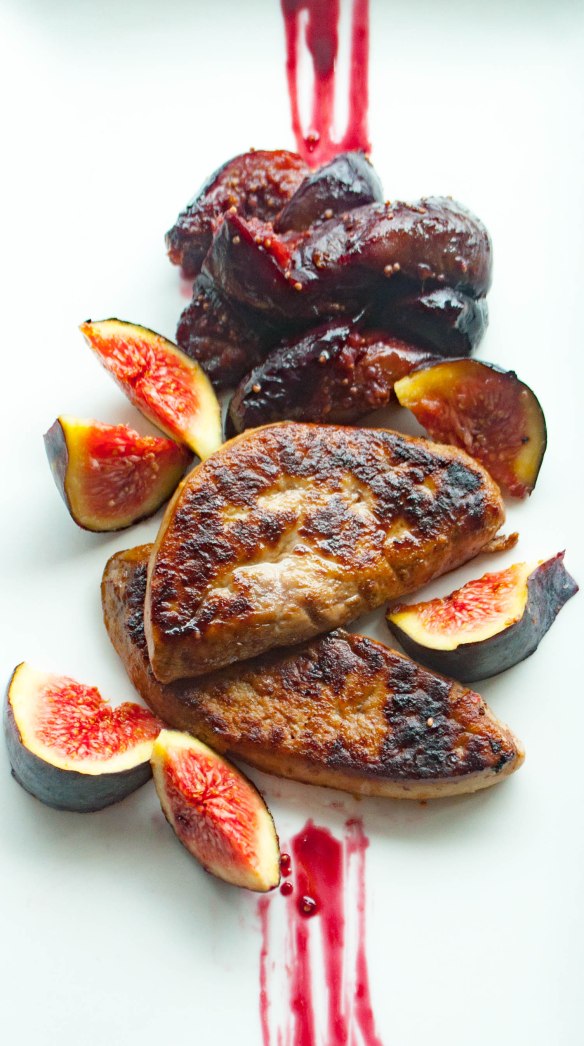
The rich flavor and the smooth creamy texture of the fat liver is just so delicate and heavenly that I find it very difficult to describe. To enhance the already excellent delicacy, I like to add some sweet, plump figs as the accompaniments, and balances its richness with the acidity of the balsamic reduction.

DSC_0032.jpg


Ingredients:

  • 2 thick slabs of foie gras
  • 5 figs, split into quarters (reserve one for plating)
  • 1⁄4 cup red wine
  • 1 tablespoon balsamic vinegar
  • Pinch of salt, fresh ground pepper
  • 1 teaspoon sugar

Directions:

For the fig and balsamic reduction.

  1. Combine all ingredients with 1/2 cup water in a saucepan.
  2. Cover; bring to boil over high heat.
  3. Reduce to a simmer, cook for 10 minutes or until fruit has broken down.

For the Foie Gras:

  1. Season foie gras liberally on all sides with salt and pepper.
  2. Heat a small skillet over high heat for at least 3 minutes.
  3. Place foie gras in skillet, cook, swirling pan gently from time to time, until golden brown and crisp on first side, about 30 seconds.
  4. Flip foie gras onto second side and cook for 30 second longer.
  5. Transfer to paper towel-lined plate and let rest for 1 minute.


NYC Part III- Eleven Madison Park

It has been two months since my visit to Eleven Madison Park, one of the top 50 restaurants in the world. The visit was truly an amazing culinary experience that I will not forget for a while! When I think back to my memories of the restaurant, not only do I recall each specific bite of food, but I also remember the emotion of eating there, the unadulterated rapture of tasting great (not just good!) food…

The tasting menu which consists of 14 courses of creatively prepared dishes was a gastronomic experience like no other. The presentation, taste and service were top notch; the pacing was on point due to the attentiveness of the staff. Everything on the tasting menu was decadent and delicious. Highlights of the meal included a little egg filled with sturgeon caviar, sabayon and chives, a caviar and cauliflower take on Eggs Benedict and a custard dessert made with a ball that shattered to spill honey. The relatively mediocre dishes in the menu would suffice as good or great in any other restaurant, but deemed to be overshadowed by the remarkable dishes.

Overall a truly whimsical, innovative, daring and phenomenal food journey…I better let the photos speak for themselves!!


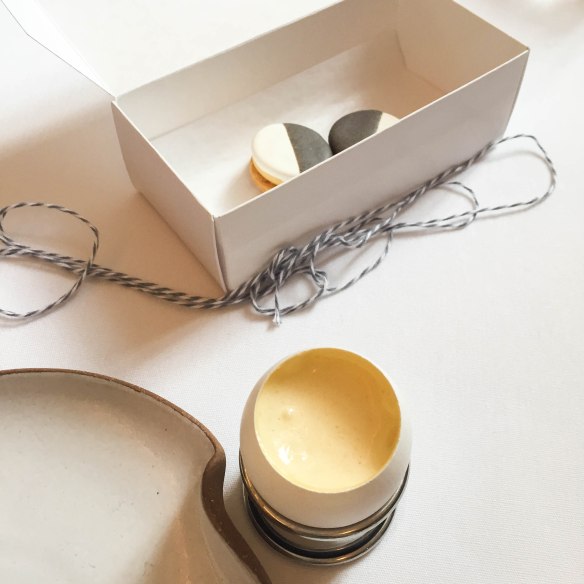
Savory cookies made with apple and cheddar in stylish B/W and Sturgeon sabayon presented in an egg shell that was perfectly cut on the top and emptied.

IMG_6817

Oyster: pie and velouté. The velouté was creamy, and the crust on the mini pie was crisp.

IMG_6818.jpg

Scallops marinated with black truffle and leeks

IMG_6821

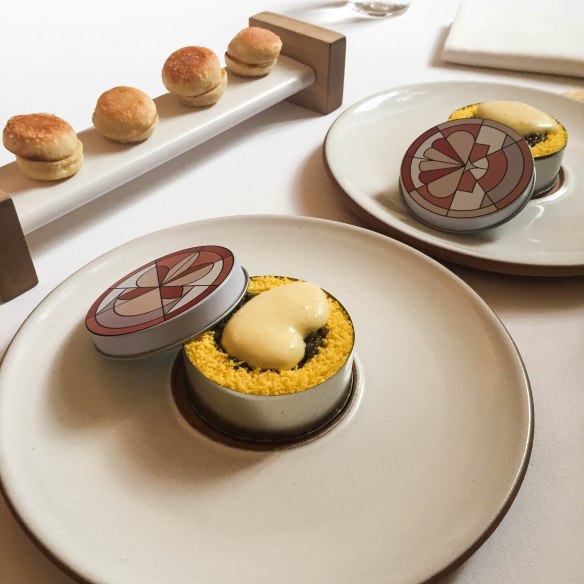
My absolute favorite! An upscale reinvention of classic Eggs Benedict made with caviar, cauliflower and ham, totally showcased the creativity of the Chef. The house made English muffins was a lovely accompaniment.

IMG_6822.jpg

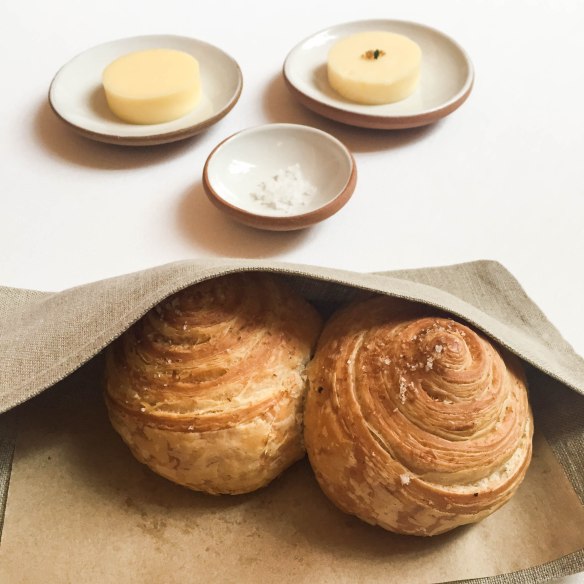
House made rolls along with butters and sea salt.

IMG_6823.jpg

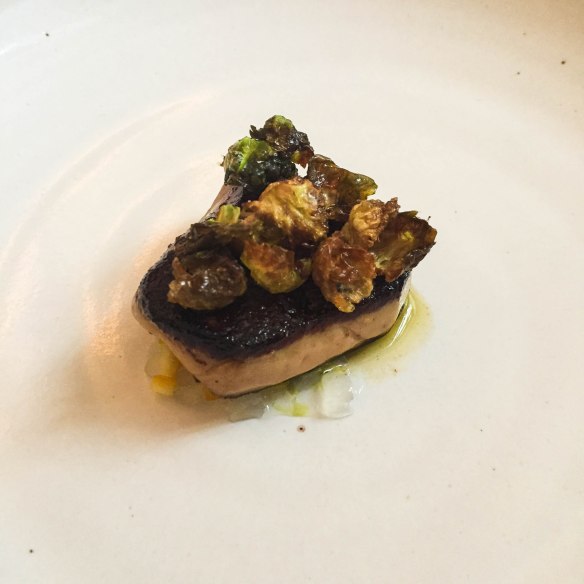
An interesting take on “surf and turf” made with perfectly seared foie gras with Brussels sprouts and smoked eel.

IMG_6824.jpg

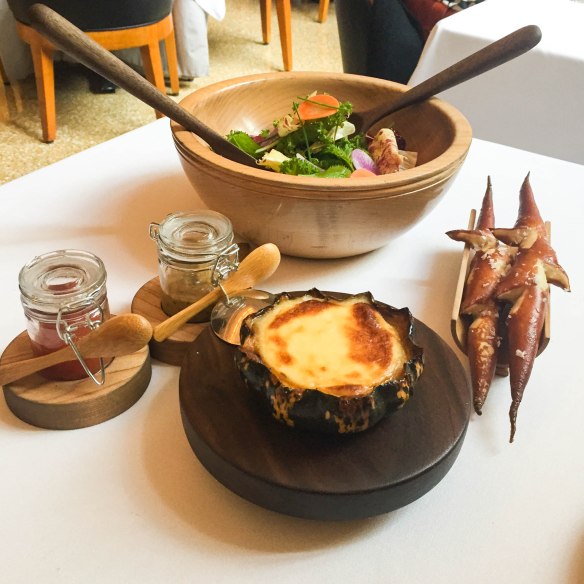
Waldorf salad. The original recipe was invented in 1896 by Oscar Tschirky who was the head waiter at the luxurious Waldorf Astoria hotel at the time (which was later demolished in 1929 to make way for the building of the Empire State Building). The salad was prepared in front of you, combining multiple ingredients, such as celery root, walnuts, grapes and apple. The salad was served in a giant bowl which had two compartments, in the bottom there was a cold soup made of the same dressing as the salad.

The duck was roasted with honey and lavender; it was perfectly cooked and packed with flavors!

duck.jpg

The cheese course totally exceeded my expectation. It was a beautifully melted Cato Corner cheese fondue sitting in a squash, you simply have to dip the homemade pretzel bread in to enjoy it. And guess what: it was divine!

IMG_6838

Pre-dessert- Botrytis with Ice Cream, Bitter Almond, and Ginger Crumble. Inspired by the flavor of grapes lucky enough to have been infected with the fungus, also known as noble rot.

IMG_6840

Milk and Honey Custard with Bee Pollen Ice Cream. Shattered the honeycomb shell and you’d be thrilled to discover the honey inside!

IMG_6841

Dishes are playful and interactive from start to finish, the dessert ‘Name That Milk’- which came in an ornate wooden box containing four bars of specially commissioned Mast Brothers chocolate together with pencils and a card with four animal drawings totally blew my mind. Diners must taste each bar to determine which chocolate belongs to which animal: cow’s milk, sheep’s, goat’s or buffalo’s.

IMG_6843.jpg

Eleven Madison Park (elevenmadisonpark.com)

11 Madison Ave, New York, NY 10010